
It was originally written by Steven Lewis who has kindly given us permission to post it here. Steven runs HDI Tuning Ltd who specialise in creating custom remaps for all vehicles fitted with the 2.0HDi engine and Bosch EDC15 ECU. His company has a good reputation on various Peugeot forums and you can view some customer testimonials here.
Contents:
- Introduction
- Standard HDI 90 ECU settings
- What is done in a bad remap?
- What else should and shouldn't have been done?
Introduction
This document has been written to educate those planning on using a poor quality remap. These are often given away for free on ebay. Sometimes these are used by large companies who charge lots for their ‘remaps’. Hopefully this document will be understandable to those who have a basic understanding of how a Diesel engine works.The ECU file compared in this document is from a Peugeot 306 HDI. This vehicle comes with a 2.0HDI common rail diesel engine capable of producing 205 Nm of torque and a peak power output of 90 BHP from the factory.
Before we learn about what changes have been made, we should first learn a little about common rail diesel engines:
A common rail Diesel engine controls the injection of fuel electronically with the help of a highly pressurised fuel rail, which is ‘common’ to all of the injectors. This eliminates the need for fuel pump timing, as the point at which the injectors fire is controlled through the ECU. The fuel pump is driven by the engines timing belt. On the 2.0 HDI the fuel pump pressurises the fuel to 1350 Bar under full load (this can consume up to 5 BHP of power). Due to the incredibly high fuel pressure, the fuel that is injected into the cylinder is atomised, creating a cleaner burn and a shorter injection time due to the increased rate of flow (when compared to conventional diesel engines).
The relatively short injection time creates the possibility for multiple injections during one stroke of the piston. The first injection event is called ‘pre-injection’. This involves injecting a very small amount of fuel into the cylinder during the compression stroke. (approx 1mm3). This gradually raises the temperature of the cylinder before the main injection event. The pre injection process reduces combustion noise by up to 1dB per cylinder and allows for a higher peak cylinder pressure during the main injection phase. This also reduces the amount of time it takes for the fuel to ignite under the main injection event.
The next injection event is indeed the main injection phase. This is a much larger quantity of fuel, and provides the main power stroke of the engine. Injected quantities can reach 51mm3 per stroke (under full load with standard ECU settings). Newer models of the HDI also take advantage of ‘post injection’ The purpose of this late injection is to burn as it passes through the diesel particulate filter in order to burn off any soot which could potentially clog the filter.
The HDI 90 engine has no electronic boost control, and comes fitted with either a Garrett GT1546s or a 3K K03 turbo charger. The boost pressure is controlled by a mechanical pressure actuator which opens the waste gate and diverts flow away from the exhaust turbine.
Standard HDI 90 ECU settings
The main limit of fuelling throughout the rev range is determined by the ‘torque limiter’. Although this actually limits the quantity of diesel injected into the engine, it is commonly known as a torque limiter due to the close relation between IQ (injected quantity) and engine torque output. For a standard Peugeot 306 HDI fitted with the Bosch EDC15 ECU the torque limiter looks like this: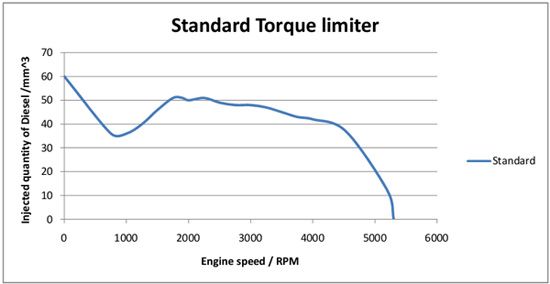
Figure 1: Torque limiter for standard Peugeot 306 HDI 90
Here the maximum IQ is 51mm^3 of Diesel per stroke at 2250 RPM. This gives a torque output of around 205 or 215Nm (standard Vs actual dyno result) and a peak bhp of 90 or 87.5 (standard Vs actual dyno result) at around 3200 RPM. Dyno printout can be seen here:

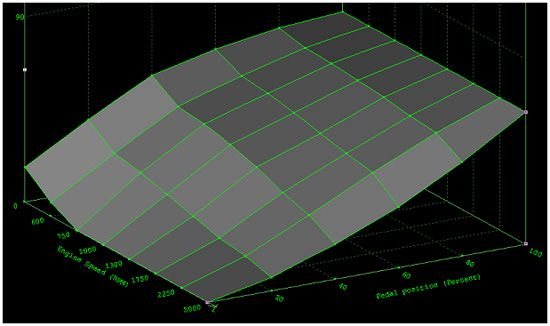
Figure 2 Accelerator request map
In order to reduce the production of black smoke due to incomplete combustion, the amount of air going in to the engine is recorded. The IQ is then limited with respect to the mass of air entering the engine, and the speed of the engine. This gives the fuel to air calibration map (more commonly referred to as the smoke map, please refer to Figure 3 below.). At the highest air flow of 900mg/stroke, fuelling (Z axis) is limited between 62-64 mm^3 of diesel. Only when the air flow is lower than around 700mg/stroke will the smoke map have any great effect upon the injected quantity.
In the event of a faulty Mass Air Flow sensor (MAF) power can be limited as the ECU thinks there is not a high enough air flow to burn the fuel completely. In a high quality remap, full fuelling would not be given until 900 mg/stroke of air.
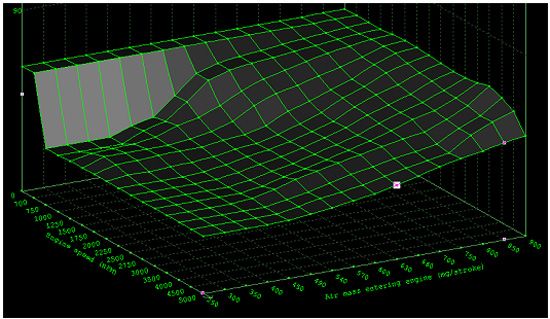
Figure 3: Fuel to Air calibration map
The next map that limits power is the fuel temperature map. This limits the IQ if the fuel temperature gets too high. This is to prevent overworking and damaging the high pressure fuel pump. At a temperature of 82 degrees or lower, the injected quantity of diesel is limited to 53mm^3 at around 2000 RPM. Please see Figure 4.
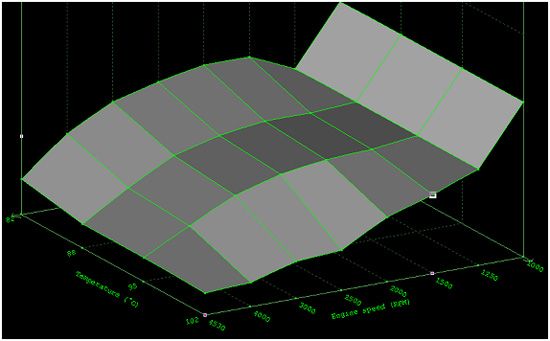
Figure 4: IQ limitation with respect to fuel temperature and engine speed
If the peak values of each map are compared it is apparent that the torque limiter is always the limiting map under the standard ECU settings.
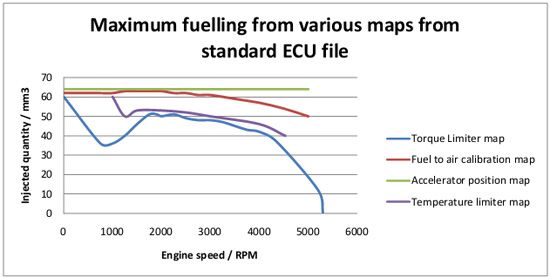
Figure 5: Comparison of limiters
What is done in a bad remap?
To remap a Diesel car more fuel must be requested. The greater request in fuel converts directly to a higher torque output and also a higher BHP output. BHP can be calculated by multiplying the torque output in ft/lb by the engine speed in RPM and dividing by 5252.A good ‘tuner’ would alter the necessary maps to increase the injected quantity of diesel, and would calculate the required fuel quantity in the torque limiter for the desired BHP output. However, in this document we are looking at a bad remap, and these are not altered in the ways in which one would expect them to be.
ALL of the bad remaps I have come across for the HDI engine have managed to miss the fuel temperature dependant limiter. This immediately restricts fuel to just 53mm^3. This is not far from the stock settings so no obvious performance gain would be seen. To counteract this failed attempt, many ‘tuners’ alter the injector calibration maps. The reasons why this is bad are covered in more detail further on in this document.
The file used in this comparison can be found for free on many websites, and it’s easy to see why.
The first map we will look at is the torque limiter. This has been altered all over by the same amount (18mm^3) without any concern for the points at which fuelling is increased.
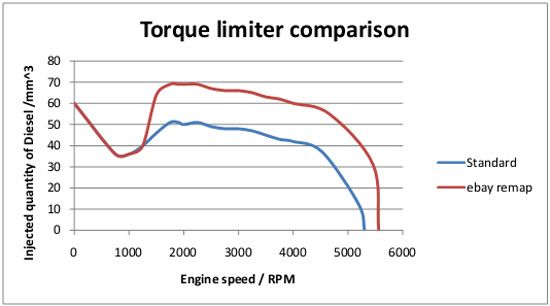
Figure 6: Comparison between standard torque limiter and bad remap
Through some very crude calculations it is possible to calculate what the expected BHP output of this torque limiter would be by applying a torque conversion factor to the IQ. In the standard TL this comes out to 90 BHP at 4000 RPM. In the modified TL this comes out at 137.3 BHP at 4660 RPM. Note how the ‘tuner’ has tried to increase the engines maximum speed past 5300 by altering the TL axis. This is not the way to do this as there are other limiters in place. Figure 7 shows a comparison graph of the calculated BHP output for each different torque limiter.

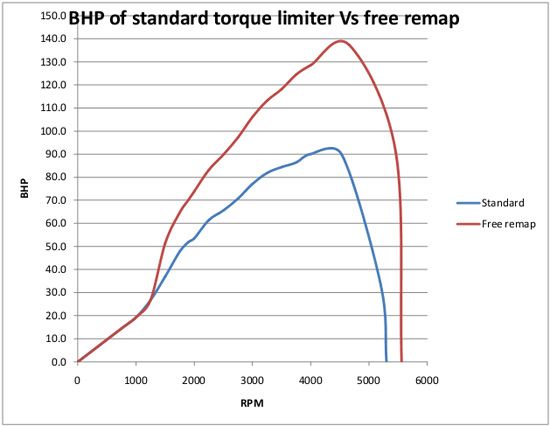
Figure 7: BHP output comparison
After looking at the calculated data it becomes apparent that the tuner has NO IDEA what they are doing. Requesting 140 BHPs worth of fuel on a standard stage one tune without an intercooler fitted and increased boost is a recipe for disaster. Clouds of thick black smoke would follow, and it’s likely the turbine blades would incur damage due to excessive EGTs.
Luckily, the ‘tuner’ responsible actually missed an important map so these high fuelling levels would not actually occur, and also didn’t increase the other maps to the right amount to prevent them from limiting the torque limiter. The first map that was missed completely was the fuel temperature map. Immediately this puts an IQ limit at 53mm^3.
The accelerator request map was altered, but only to a maximum value of 70mm^3. See Figure 8.
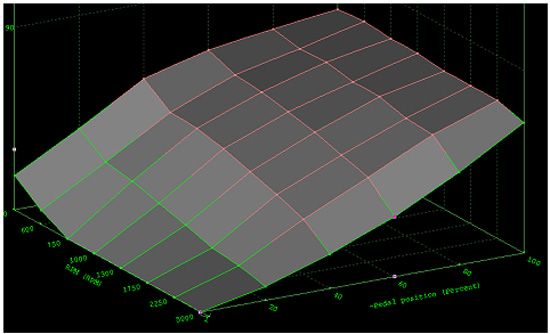
Figure 8: Bad remap accelerator request modification
The smoke map was also altered, but again by the wrong amount. This time the smoke limiter was increased to 66-67mm^3. Yet again this is lower than the quantity requested by the torque limiter which was originally the lowest setting of all the maps in the standard ECU file.
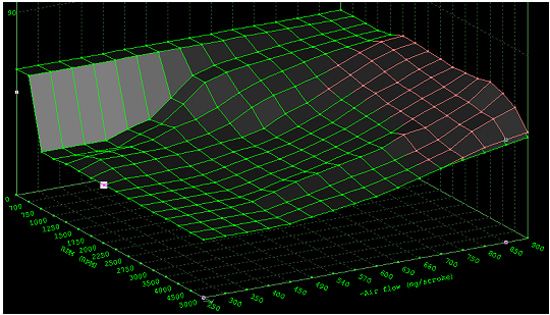
Figure 9: Bad remap smoke map
If a new comparison is carried out between the maps, (see Figure 10) the fuel temperature limiter is now controlling the amount of diesel being injected in to the engine rather than the torque limiter as before. Note how the limits are no longer well separated for smooth running conditions as in the standard ECU file shown in Figure 5.
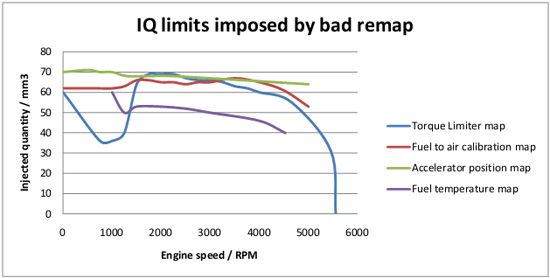
Figure 10: IQ limits from bad remap
The power as a product of the fuel temperature limiter can be calculated using the same method as before:
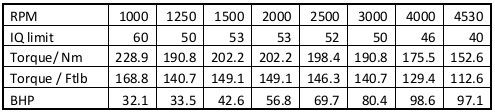
The peak power output should now be approximately 98 BHP using some simple calculations. When driving with one of these remaps the power gain seems a lot more than 8 BHP and there is usually a large cloud of smoke behind the car and some other strange rattly noises. If we look further in to the file we find that the injector calibration maps have been altered.
The injector calibration maps have axes of fuel pressure and the requested amount of fuel. The Z axis is the opening time of the injectors in micro seconds. These maps are highly calibrated to suit the injectors fitted to the car. This allows the ECU to deliver a precise amount of fuel when requested. For cars fitted with an MPG trip meter, altering this map will give false MPG readouts.
The problem with altering the injector calibration maps is that it is very hard to work out just how much fuel is actually being requested. As we have already found out, the ‘tuner’ has requested 140 BHPs worth of fuel, but would only be getting 98 BHP. This was obviously not a great result, so instead of finding the limiter, the calibration maps were altered.
The calibration maps should only be altered if the injectors have been upgraded.
Before it is possible to work out exactly how much fuel has been requested, we need to know if the fuel pressure map has been altered. Fuel at a higher pressure can flow at a greater rate through the injector nozzle in a given time when compared to fuel of a lower pressure.
On first glance of the fuel pressure map it would seem that the fuel pressure has been increased to 1389 Bar (1350 bar is standard on the HDI engines). This would be ok, only if the associated rail pressure limiters had been altered. Well, surprise surprise, the fuel pressure limiters have all been missed, so the fuel pressure is really 1350 Bar maximum. (please note, I forgot to include the axes in Figure 11. These should be IQ and RPM)
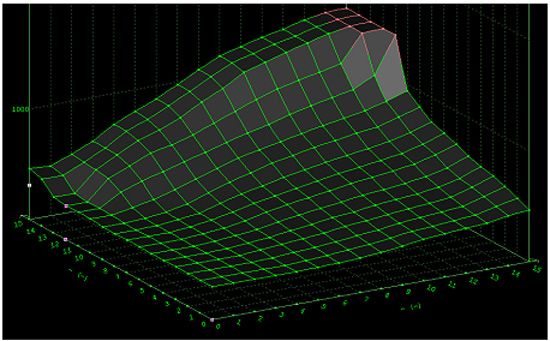
Figure 11: Fuel pressure map. Axes of RPM (right) and requested fuel quantity (left)
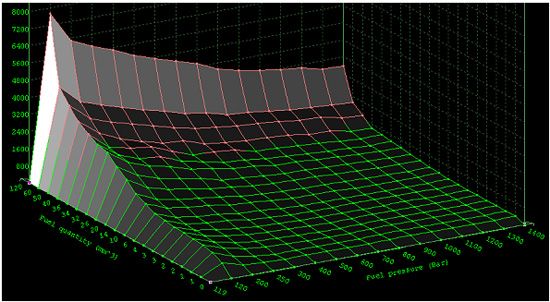
Figure 12: BAD remap, alterations to injector calibration map
Ok, back to calculating the fuel flowing through the injectors. We now know that: Peak BHP settings are at 4000 RPM in this remap, at this point an IQ of 46mm^3 is requested from the fuel temperature limiter, and the fuel pressure is 1350 Bar. If we look at the injector calibration map (see Figure 12) we can see that the injector opening time has been changed from 783.6 to 861.6 micro seconds at this point (This required a bit of interpolation between the four points given, see the table below for further details)
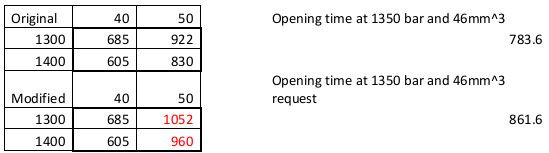
Now we need to do a bit more maths to try and figure out how much fuel is flowing through the injector with its new opening time. A generic equation can be used (this ignores many other factors):

If we use the standard opening time with the known fuel quantity and rail pressure we can rearrange this equation to find the constant required to calculate the new fuel quantity. In this case it works out to be 625.898. If this ‘constant’ is plugged into the equation with the new opening time of 861.6 micro-seconds the fuel quantity works out to be 50.6mm^3 per stroke. Using the previous BHP calculations this works out at around 108 BHP maximum. Now that is now a more noticeable power increase, but it definitely does not compare to a proper remap of around 120 to 125 BHP!
Note how the calibration map has been changed in the top left corner by a large amount. To an unskilled tuner this part of the map would look like the ‘biggest’ part, so they would probably think it right to change it. If you look at the axes you will see this part is actually at just 119 bar of fuel pressure. This kind of pressure would only be reached during cranking. Completely useless for a performance remap!
What else should and shouldn’t have been done?
Ok, so we can already see that the fuel calibration maps have been changed due to missing the temperature limiter. Now we want to know why this is bad, and what else should have been changed.If we open the injector for longer than the ECU thinks it would be, the time at which the injection period ends will be far too late. This can cause high EGTs as the fuel will still be burning during the exhaust stroke (in some cases the changes to the calibration maps can be much more extreme, this map is relatively tame compared to some I have seen from ‘professional’ companies) High EGTs result in damage to the turbine blades within the turbo charger and can eventually result in turbo failure.
With a good remap the start of the injection period would actually be advanced to allow for all the fuel to burn completely. To find the optimal injection advance the best way is to test several different maps upon a rolling road. At a certain point the torque and power output will peak, and then begin to drop again as the injection is advanced too much. Now at this point I would love to include a graph showing the optimal injection advance I found on the dyno, but I don’t want to make this too easy for anybody trying to make their own remap ;)
Now the next part is what really annoys me. On the HDI 90 there is NO electronic boost control. This means that there is no need to alter any of the turbo maps, as the wastegate is controlled by a mechanical pressure actuator.
In this file all of the turbo maps have been altered. This confirms that the ‘tuner’ who made this file had no knowledge of the HDI engine, and they certainly didn’t test this file on any cars before selling it on eBay.
Overall a very informative article and I will certainly try and get more information up about remapping and diesel tuning as it is a very popular topic at the moment. Readers who already have a remap file might be interested in one of my other articles on how to upload a remap file to your Peugeot 306 HDI.
